

Makeup Artist Website Design That Wins Bookings
A prospective bride may find your work at 11 p.m., save three images, and visit your website the next morning with one question in mind: can I trust this artist with one of the most photographed days of my life? Effective makeup artist website design answers that question before a visitor ever sends an inquiry. It turns the care, creativity, and calm you bring to the chair into an online experience that feels equally considered.
For beauty professionals, a website is not simply a gallery or a digital business card. It is a place where visual style, practical information, personality, and trust meet. When those pieces work together, your site can help you attract clients who appreciate your approach, understand your value, and arrive ready to connect.
Why Makeup Artist Website Design Is a Business Decision
Social media is valuable for discovery, but it is borrowed space. Platform changes, crowded feeds, and a fast-moving stream of content make it difficult to tell your full story there. Your website is the shore your audience can return to: a focused destination where your work is not competing with a dozen other posts.
That distinction matters especially for bridal makeup artists, luxury beauty providers, and artists serving editorial, event, or commercial clients. The decision to inquire is personal. Clients are assessing more than whether they like a final look. They are looking for consistency, professionalism, a process that feels easy to navigate, and signs that you understand the occasion they are planning.
A polished site also helps shape the quality of your leads. If your messaging is vague, your portfolio is difficult to browse, or your inquiry path creates friction, visitors may leave or submit requests that are not aligned with your services. Clear positioning gives the right people a reason to choose you and gently filters out poor-fit inquiries.
Start With the Feeling You Want Clients to Carry
Before selecting a color palette or homepage layout, define the impression your brand should create. Are you known for softly luminous bridal makeup, refined full-glam artistry, skin-first beauty, or expressive editorial looks? The answer should influence every design choice, from photography and typography to the words around your services.
A romantic wedding artist may benefit from an airy composition, soft neutrals, graceful serif type, and imagery that feels intimate rather than overly posed. An artist known for bold, high-fashion looks might need stronger contrast, more editorial spacing, and a portfolio that leads with visual confidence. Neither direction is automatically better. The right one is the one that makes your ideal client think, “This feels like me.”
Consistency is the current beneath a memorable brand. If your Instagram feels warm and elevated but your website relies on generic beauty imagery, mismatched fonts, and informal copy, trust can drift. A cohesive presence makes your business feel established, even when you are still growing.
Let your photography do more than show finished faces
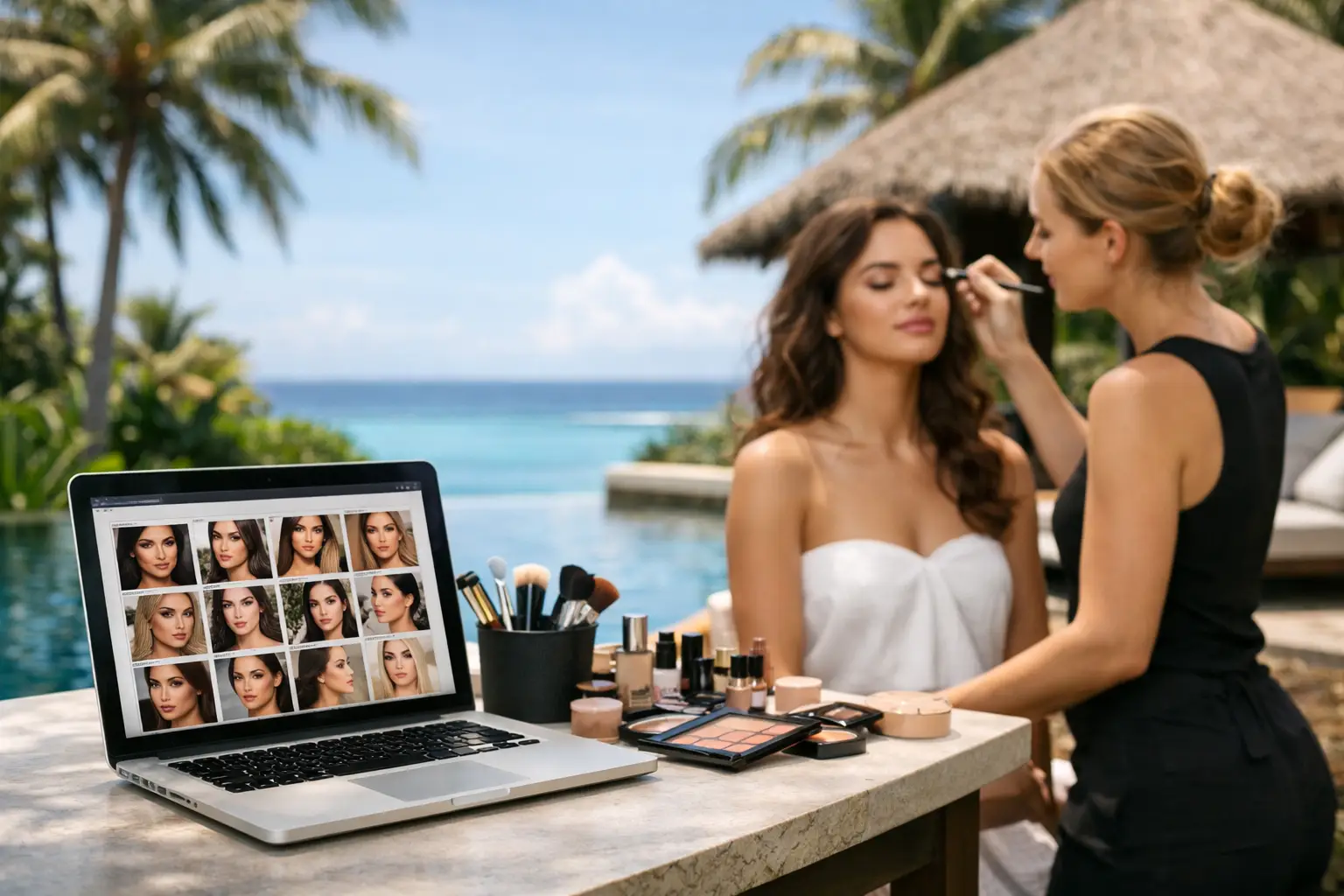
Close-up final looks are essential, but they should not carry the entire site alone. Clients also want to picture the experience of working with you. Include images that show your artistry in motion: preparing a client, refining details, creating a calm getting-ready environment, or working alongside a bridal party.
Use real work whenever possible. Stock photography can fill a temporary gap, but it rarely communicates the distinct quality of your technique, client experience, or local reputation. A thoughtfully planned brand shoot creates a deeper visual library for your website, social channels, email marketing, and search presence.
As you choose portfolio images, show range without creating confusion. A large collection of unrelated looks can make an artist seem less focused. Grouping work by bridal, editorial, natural makeup, special events, or another meaningful category gives visitors an easier path to the work that speaks to them.
Build a Homepage That Creates Momentum
Your homepage should orient visitors quickly. Within the first screen, they should understand who you serve, what makes your work distinctive, and where to go next. A striking image matters, but it works best alongside a clear statement of value.
Rather than relying on a broad phrase like “professional makeup services,” describe the experience and audience with more intention. For example, an artist might speak to brides who want timeless, skin-enhancing makeup and a grounded presence on their wedding morning. That language carries more meaning than a list of techniques alone.
From there, guide visitors through a natural sequence. Introduce your signature approach, feature selected portfolio work, explain your core services, share proof of the experience you provide, and invite the visitor to inquire. This is not about packing every detail onto one page. It is about helping each person take the next step without wondering where to look.
A strong call to action should be visible more than once, but it does not need to feel pushy. Phrases such as “Begin Your Bridal Inquiry,” “Share Your Event Details,” or “Explore the Portfolio” can feel more welcoming than a generic button. The language should match the level of care your clients can expect.
Give Service Pages the Attention They Deserve
Many beauty websites put nearly all their energy into the homepage and portfolio, then treat services as an afterthought. Yet service pages often answer the questions that move someone from interest to inquiry.
Each primary offering deserves its own thoughtful page when your business model supports it. A bridal page, for example, can speak directly to the wedding-day experience, explain what a bride can expect from the process, showcase relevant work, and direct her toward an inquiry form. A page for special events may need a different tone and different expectations.
This structure also gives search engines clearer context. Someone looking for a bridal makeup artist in New York City or a makeup artist for an event in Sarasota, Florida is more likely to find a page that specifically addresses that service and location than a general portfolio page with a few scattered keywords.
Be specific without overloading the copy. Explain the kind of client you serve, the concerns you help solve, and what the experience is like. If you offer on-location services, trials, group makeup, or commercial artistry, mention them where they are relevant. Accuracy protects trust. Do not promise availability, travel coverage, or outcomes your business cannot consistently provide.
Make the Inquiry Experience Feel Effortless
A beautiful website can still lose a booking if the next step is unclear. Your contact page should feel like a continuation of your brand, not an unfinished form at the end of the journey.
Ask for the details you truly need to respond well: event date, location, service type, party size when relevant, and the client’s preferred contact information. You may also ask how they found you or invite them to share their vision. Keep the form focused. If it feels like paperwork, a visitor may abandon it before reaching out.
Set expectations with a short note about what happens after submission. Clients appreciate knowing whether they will receive a response, what information you will confirm, and how the conversation will continue. This small act of clarity signals organization and care.
Make sure the experience works beautifully on a phone. Most prospective clients will first encounter your site on a small screen, often between errands, venue appointments, or late-night planning sessions. Buttons should be easy to tap, text should be easy to read, and galleries should load quickly without sacrificing the quality of your work.
Trust Is Found in the Details
For a service built around personal care, credibility cannot be an afterthought. Testimonials are especially meaningful when they describe your professionalism alongside the final look. A review that mentions your calming presence, punctuality, communication, or ability to make someone feel confident tells a fuller story than a short compliment alone.
An about page can deepen that connection. This is not a résumé in disguise. It is an opportunity to share your point of view, the values that shape your client experience, and the reason behind your work. A warm professional portrait helps, too. Clients want to know who will be in the room with them.
Practical details build confidence as well. Clearly communicating your service area, how to inquire, and the types of occasions you serve reduces uncertainty. For established artists, featured publications, professional credentials, or partnerships may add useful context. For newer artists, strong client feedback, excellent imagery, and a well-organized process can be just as persuasive.
Design for Visibility, Not Just Applause
A visually impressive site should also be easy to find. Search-friendly makeup artist website design begins with purposeful page structure, descriptive headings, relevant service language, fast performance, and image descriptions that accurately reflect the work shown.
Local visibility requires a thoughtful balance. Include the cities and regions you genuinely serve, but avoid repeating place names until the copy sounds unnatural. A bridal artist serving Clearwater, St. Petersburg, and Tampa can create meaningful location context through service pages, real wedding features, testimonials, and a properly maintained business profile. The goal is to be understood by people and search engines alike.
Search optimization is not a one-time task. Your portfolio evolves, new reviews arrive, services expand, and the language clients use may shift. Regular updates keep your website from becoming a beautiful but outdated island. A long-term partner can help align design, messaging, SEO, and content so each piece supports the next.
Choose Custom Strategy Over a Template That Looks Like Everyone Else
Templates can be useful for an early-stage business with a limited scope. They offer a starting point and can be launched quickly. The trade-off is that they often limit customization, make it harder to establish a distinct visual presence, and encourage a one-size-fits-all structure that may not reflect how your clients actually make decisions.
A custom website for makeup artists is not valuable because it is custom for its own sake. It is valuable when the design is rooted in your goals: attracting a particular kind of client, presenting your work at its best, supporting search visibility, and making inquiries easier to manage. Palm Island Creative approaches that work as a guided journey, bringing together brand clarity and practical digital foundations so your business can make waves with purpose.
Your website does not need to imitate every beauty trend to feel current. It needs to feel unmistakably yours, make the next step clear, and give the people already drawn to your artistry a confident reason to reach out. That is how a thoughtful digital destination begins turning admiration into meaningful bookings.